in which highly trained interventionists use in-the-moment
assessment, clinical judgement, and highly individualized
curriculum to help learners achieve the best possible outcomes.
We take pride in the investment we make in training our staff! Our goal is to develop staff who will be skilled progressive behavior analysts with the ability to make in-the-moment decisions, which we believe is fundamental to quality ABA and the AP Method.
All staff must meet the requirements required for RBT® certification and demonstrate competency in the understanding and implementation of ABA and the AP Method. Most importantly, they must show a passion for children and a dedication to the field of autism treatment.
Autism Partnership was formed in 1994 to meet the tremendous need
for effective services to families with autistic children.
Based upon our founders’ extensive and unique experiences in
providing behavioral treatment to children, adolescents and
adults we have developed a comprehensive program that provides a
variety of services.
Our directors were intimately involved in the treatment program
developed at the UCLA Young Autism Project during the period of
1975-1987. Our current work incorporates the knowledge gained
from the University research clinic and combines it with our more
recent experience delivering services in community based
settings. As knowledge about effective behavioral treatments
continues to advance, we have also made innovations to increase
accessibility to greater numbers of children in a variety of
settings. We have extended the application of this specialized
teaching methodology to children who are older. While it is clear
that the optimal time to begin intervention is at the preschool
age, there are many older children who have greatly benefited
from intensive behavioral treatment.
NOW HIRING REGISTERED BEHAVIOR TECHNICIANS (RBTs)! If you are not yet an RBT, we can provide you with paid training as you work towards your certification!
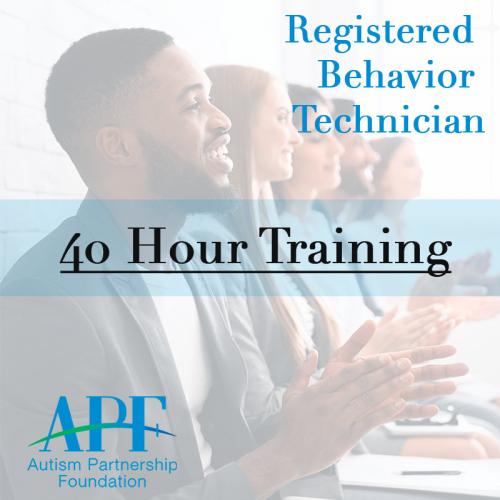
Autism Partnership Foundation (APF) is offering a FREE 40-Hour
Registered Behavior Technician™ (RBT®) training program. APF’s
online RBT training meets all BACB requirements for the
2nd Edition RBT Task List as well as additional key topics
we believe are essential for anyone working directly with
individuals diagnosed with autism.
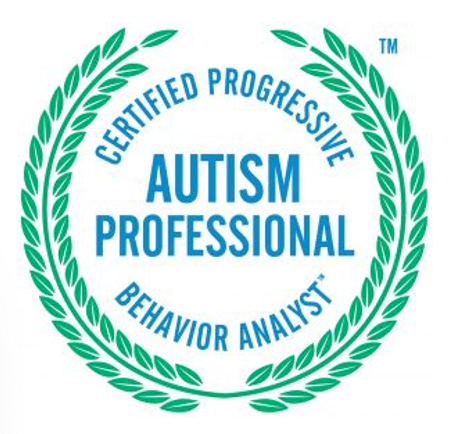
We are pleased to announce the development of the Progressive
Behavior Analyst Autism Council™ (PBAAC). The PBAAC has
recently created the Certified Progressive Behavior Analyst –
Autism Professional™ certification for professionals with
specialized knowledge and experience in overseeing the
implementation and dissemination of effective and caring
interventions in autism in a progressive approach to ABA.
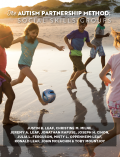
The purpose of this book is to provide an overview of the Autism Partnership Method for designing and conducting behaviorally based social skills groups for individuals diagnosed with Autism SpectrumDisorder.
The book is divided into three sections: 1) Introductory Information, 2) Running Behaviorally Based Social Skills Groups, and 3) Curriculum. Within the first section the reader will find overviews ofApplied Behavior Analysis, social behavior, Autism Spectrum Disorder, the Autism Partnership Method,and research evaluating the use of social skills groups. The second section provides the reader with direction in developing, running, and evaluating their own social skills group. Finally, section three provides an extensive curriculum, with detailed programs and goals, for running a behaviorally based social skills group.
“I cannot imagine that any practice would want to run social skills programming without the benefit of this amazing book. It is extraordinarily comprehensive and sophisticated, yet written in a language that is easy to read and understand. It contains a wealth of practical materials, as well as the philosophical underpinnings for how to use them and why. I love the real-world examples of intervention that is overly protocol-driven. Leaf and company challenge all levels of ABA practitioner to ask “what’s the point?” of any given exercise and “what are we trying to accomplish?” Autism families should hope that their loved ones have the benefit of social skills programming informed by this book.”
Lorri Shealy Unumb, J.D. CEO, The Council of Autism Service Providers
“This new book from Autism Partnership offers an excellent blending of theoretical, research-based and practical advice for designing important lessons within group contexts for individuals with ASD aimed at promoting and expanding social skills. The book provides a consistent model coupled with explicit lesson recommendations dealing with a broad array of social skills that are of particular relevance to school-aged learners.”
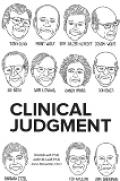
This new book, written by Ronald Leaf, Ph.D, Justin B. Leaf, Ph.D, and John McEachin, Ph.D provides insight into the past, present and potential future of behavior analysis treatment in autism. Written in the spirit of progress and flexibility, Clinical Judgement presents a thoughtful and encouraging history of those who paved the way in pioneering Applied Behavior Analysis and explains how and why the field was able to develop as it did. Part 2 then goes on to examines possible regressions in the field, despite its foundations of progress and innovation, while Part 3 emphasizes the importance of clinical judgement in practice, both today and in the future. Both inspiring and controversial, Clinical Judgement is a fascinating and enjoyable read for any ABA practitioner.
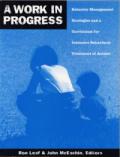
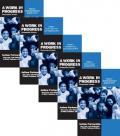
A comprehensive guide for any parent or professional working with Autistic children, A Work In Progress is an absolute must-have. Parents of newly diagnosed children and professionals looking for a concrete curriculum will find this book to be an invaluable resource. The two-part manual presents ABA-based behavioral intervention strategies along with a detailed curriculum that contains 54 clear, step-by-step exercises.
The first half of the book, entitled Behavioral Strategies For Teaching Improving Behavior of Autistic Children, gives parents practical, how-to information on setting up an ABA program and dealing with difficult behaviors. Topics covered include: teaching formats; stages of therapy; evaluation; reinforcement; working with older children; disruptive behaviors; behavior problems; self-stimulatory behaviors; sleep problems; toilet training; eating problems; as well as play and social skills. The second part of the book is a detailed curriculum titled Autism Partnership Curriculum for Discrete Trial Teaching with Autistic Children.
Payment for Publications should be made Payable to Autism Partnership.
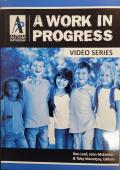
Autism Partnership is pleased to introduce the first in a series of training videos offering newly developed programs supported by a compilation of detailed video demonstrations of actual treatment sessions. Multiple examples are provided by Autism Partnership’s unparalleled Treatment Analysts illustrating the progression of programming at various stages of skill development. Each chapter includes a written section that describes programs in detail accompanied by a video companion.
In 1999 we published, A Work in Progress, a manual containing strategies and programs that we had developed over that past 20 years. It is now 2012 and we have (finally!) made some more progress. Our approach and programming efforts have continued to evolve over the last 13 years. We have continued to try to blend a natural, child-friendly approach to teaching while remaining determinedly systematic. We have developed new approaches to solving challenging behavior problems as well as teaching communication, social and recreational skills. A Work in Progress received positive reviews from parents and professionals alike. However, we would often hear, “If we could just see the programs in action, that would be even more helpful!” We have taken the feedback and developed A Work in Progress Companion Series which combines written booklets on various teaching strategies along with actual demonstrations of our work with students on DVD. We have selected a few of our favorite programs which illustrate the use of behavior methods to teach a variety of skills to students of all ages.
We hope that parents and teachers will find this series a helpful companion and extension to A Work in Progress. We are also excited to announce that all of our proceeds from A Work in Progress Companion Series will go directly to the Autism Partnership Family Foundation! This Foundation was developed for three purposes: to provide services to families with limited resources; to fund research that will investigate new strategies and programs that truly make a difference in the lives of children and families; and to disseminate information about evidence-based treatment and provide resources for training parents and professionals
Payment for Publications should be made Payable to Autism Partnership
By Autism Partnership: Mitchell Taubman, Ph.D., Ron Leaf, Ph.D., and John McEachin, Ph.D.
With contributing chapters by: Marlene Driscoll, M.A. MFT, B.J. Freeman, Ph.D., Alyne Kuyumjian, M.S., Justin Leaf, M.A., Karen McKinnon, M.A., Tracee Parker, Ph.D., Julia Peacock, M.S., Jon Rafuse, M.A., Julide Saltuklaroglu and Andrea Waks, J.D.D.
“One of the most comprehensive and easy-to-use guides available for teaching social skills to children and youth with autism spectrum disorders. A valuable resource for teachers, clinicians, and families!” – Tristram Smith, Ph.D., Associate Professor of Pediatrics, University of Rochester Medical Center
“This is a terrific addition to the information available on how to teach social skills. The authors have outlined ways to teach social skills in social awareness, social communication, social interaction, social learning, and social relatedness.” – Mary Jane Weiss, Ph.D., Director of Research and Training, The McCarton School
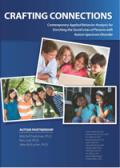
Crafting Connections is a welcomed addition to many professionals’ libraries. It provides empirically based techniques for teaching social skills to a wide age range of individuals on the autism spectrum. Crafting Connections directly deals with many of the social pitfalls individuals with ASDs face on a daily basis. E. VanBergeijk (&) Vocational Independence Program, New York Institute of Technology, 300 Carleton Avenue, Room 112 Independence Hall, Central Islip, NY 11722, USA
e-mail: evanberg@nyit.edu
Written by a team of renowned professionals, this guide highlights skill development in clear and behavioral frameworks, and provides parents and teachers with a wealth of information regarding goals and strategies. Sub-skills, prerequisites, and methods of instruction are outlined for each area in a methodical, easy-to-read manner.
The book is practical in that it addresses real world issues such as teasing and bullying, conversational development, and social comprehension. Most individuals with ASD have substantial social challenges. Many receive good and thorough intervention in various areas of the curriculum, but few receive excellent instruction in social skills. This book will increase the quality of social skill instruction offered to learners on the spectrum.
Payment for Publications should be made Payable to Autism Partnership.
By Autism Partnership: Ron Leaf, Ph.D., Mitchell Taubman, Ph.D. and John McEachin, Ph.D.
With contributing chapters by: Marlena Driscoll, M.A., LMFT, Alicia Ellis, M.Ed., M.S., Craig Kennedy, Ph.D, Toby Mountjoy, Tracee Parker, Ph.D., Leticia Palos-Rafuse, M.S., Jon Rafuse, M.A., Rick Schroeder, Jennifer Sryzens, M.S., Andrea Waks, J.D.D., and Tammy White, M.Ed.
A must read for all school administrators, special education staff and parents who have children with autism. . . . Required reading for all educators! – Joanne D. Foland, Ed.D, Assistant Superintendent, Educational Services, Los Alamitos Unified School District
Gives detailed research-based strategies and key components in a clear, concise and easily replicable manner. . . . Follow the guidelines in this book to create and deliver high-quality student-centered programs, and track student progress to demonstrate accountability. From the critical components of imbedding ABA to the keys to a highly effective reinforcement program, this book contains the answers education professionals have been seeking. . . . An outstanding work! – Mary Schillinger, Assistant Superintendent Education, Las Virgenes Unified School District
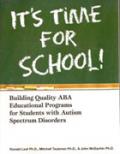
The editors of this book offer practical advice to special education directors and superintendents while providing extensive training to teachers, direct and supplementary service personnel and parents. It is an essential manual that demonstrates how to determine and optimize the best school placement for students with Autism Spectrum Disorder (ASD) while ensuring quality and continuity of service. It’s Time for School! is sure to become the standard guidebook for setting up school-based ABA programs.
Topics include:
How to Establish an ABA Classroom
Developing Staff Skills, Workshops, and Classroom Checklists
Determining the Best Placement
Functional Behavior Assessment
Data Collection and Management
Explanation of Discrete Trial Training
Payment for Publications should be made Payable to Autism Partnership.
By Autism Partnership: Ron Leaf, Ph.D., John McEachin, Ph.D. and Mitchell Taubman, Ph.D.
With contributing chapters by: Danielle Baker, M.S., Jennifer Styzens, M.S., B.J. Freeman, Ph.D., Doris Soluaga Murtha, M.A., Andrea Waks, J.D.D., Toby Mountjoy, Sandy Slater, Ph.D., David Rostetter, Ph.D., Tracee Parker, Ph.D. and Andy Bondy, Ph.D.
“Leaf, McEachin, Taubman and their colleagues provide the interested lay reader with a guidebook on how to think about some of the ‘too-good-to-be-true’ treatments for autism, and the questions one needs to ask to identify which techniques have a sound grounding in empirical research and which are based on hunches, hypotheses, or not yet validated clinical experience.” – Sandra L. Harris, Executive Director, Douglass Developmental Disabilities Center, Rutgers, The State University of New Jersey
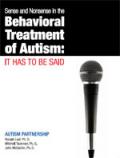
A renowned team of professionals sift the sense from the nonsense in assessing the approaches to the treatment of autism. In a field exploding with alternative treatments, choosing the best course of action for the child with autism can be a daunting task. The authors offer compelling practical evidence of Applied Behavior Analysis (ABA) as the most reliable approach to education, and provide a much needed antidote to other treatments lacking empirical data. The aim is to empower parents and professionals to ensure that their children receive quality educational programming. In supporting the notion that every individual must be approached according to their needs, goals and progress, this is a book written with knowledge and compassion for children, parents and professionals who deal with autism on a daily basis.
Topics include:
ABA as a Scientific Method
Alternative Treatments for ASD: What is the Science?
Home vs. School: Which Side Are You On?
ASD and the IEP
How Realistic is the Aim for Recover?
Sense and Nonsense about Inclusion
The Road Map to Successful Integration
Payment for Publications should be made Payable to Autism Partnership.
To explore possible enrollment in any of our ABA programs,
complete the Request for Services form and submit it to our
office. This allows our clinical staff to quickly gather
information about your child so we can efficiently answer your
questions and give you a recommendation on which services should
be provided to meet your child’s individualized needs.
Autism Partnership
200 Marina Drive
Seal Beach, Ca 90740
NOW HIRING REGISTERED BEHAVIOR TECHNICIANS (RBTs)! If you are not yet an RBT, we can provide you with paid training as you work towards your certification!